
4:45
The early
Handover does not slide. Whoever worked the night cannot leave until you are standing in front of them, and they have already been there twelve hours.
Mornio for nurses
Mornio is an iPhone alarm for nurses who dismiss alarms half asleep. To turn it off you get up and scan a code you left across the room. Then, a few minutes later, it checks you are still up. Set it for a 4:45 start, a 4pm nap before nights, or anything in between.
See the morning it is built for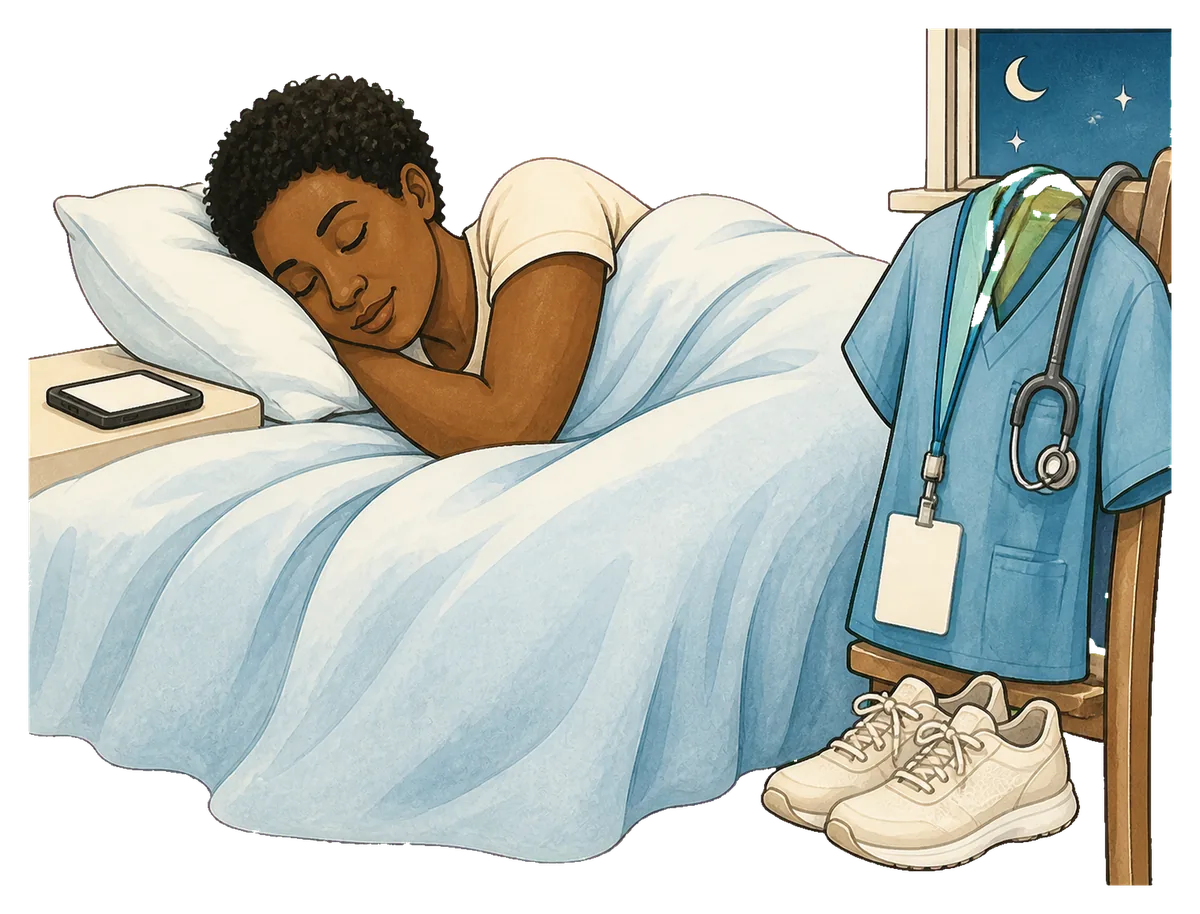
4:45AM
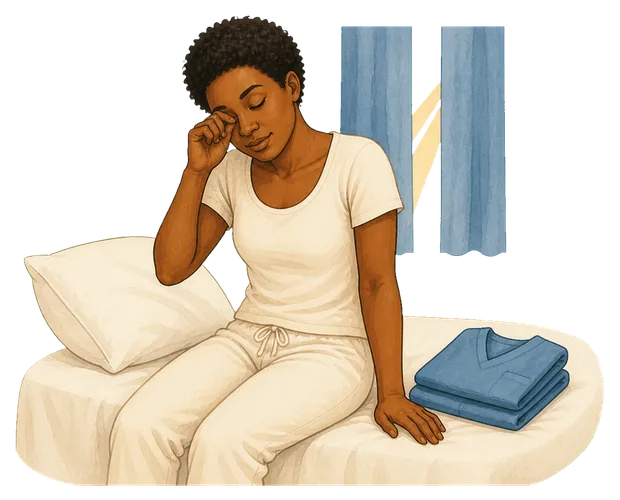
The scrubs are on the chair. The bag is packed. Everything about last night was organised by someone who knew exactly how early this was going to be.
And then a hand you were not really steering found the phone and ended it, in a moment you will not be able to recall afterwards.
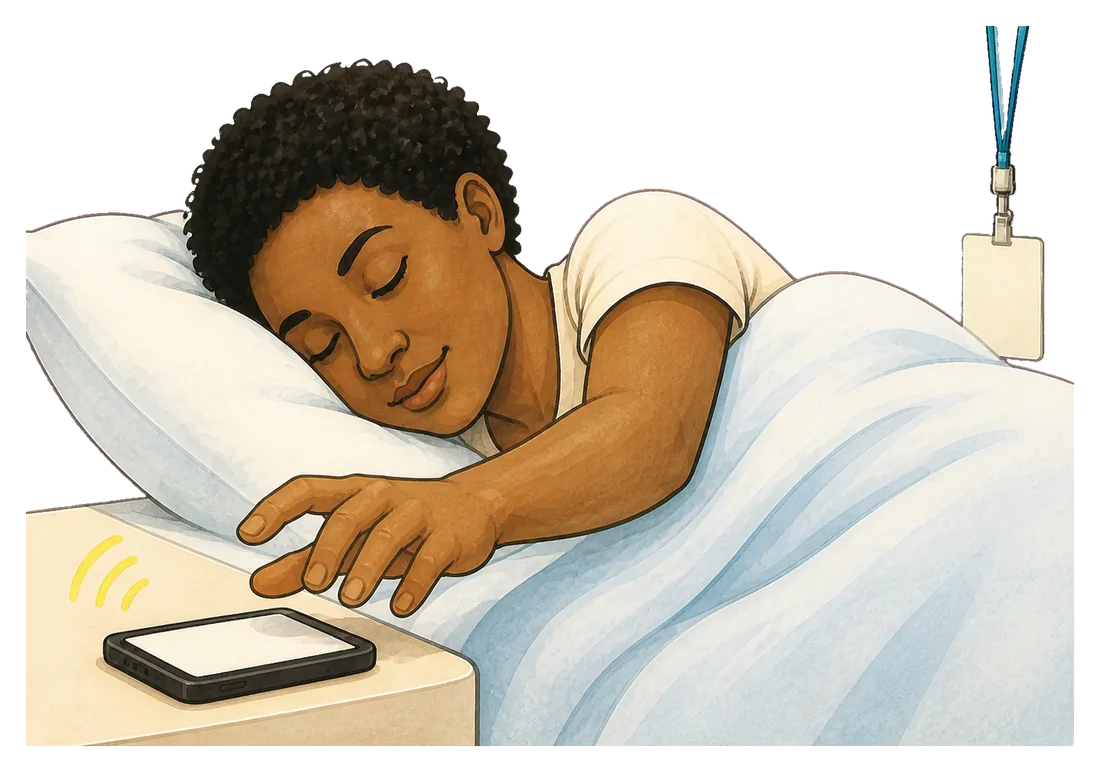
6:07AM
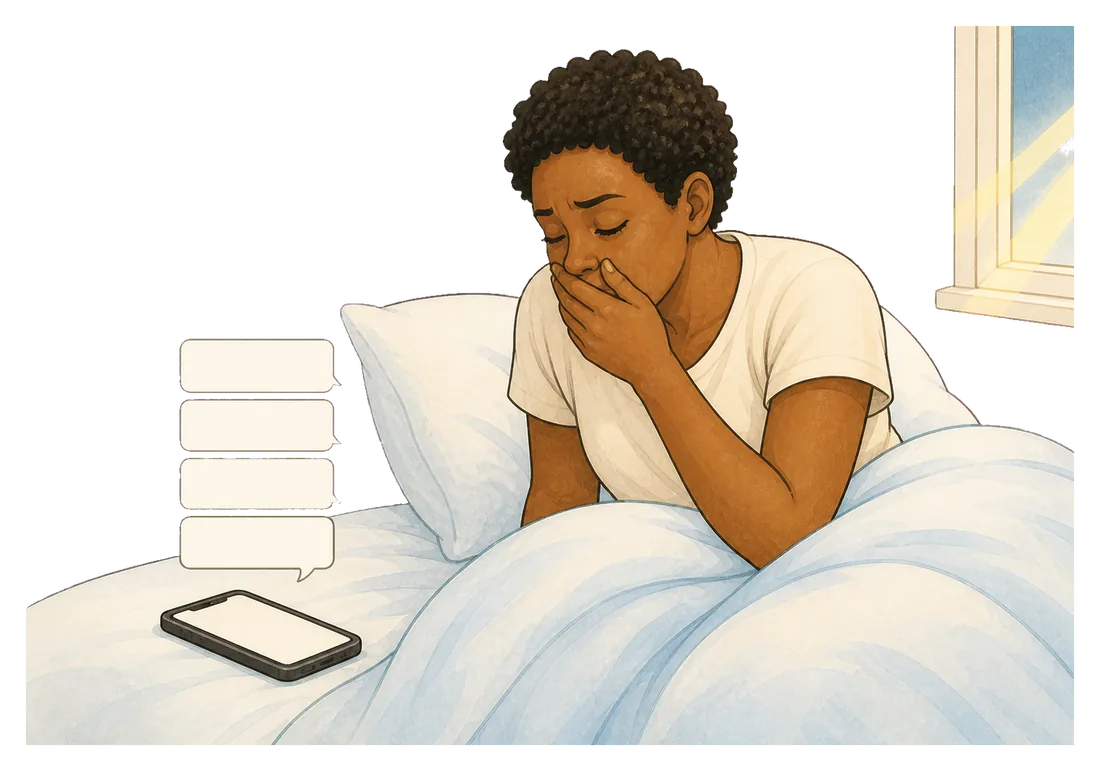
Not the alarm. The messages. Somebody on the ward has noticed you are not there yet, and somebody on nights is still standing in a corridor waiting to hand over and go home.
You are awake now, fully and horribly, and there is nothing useful to do with that except move.
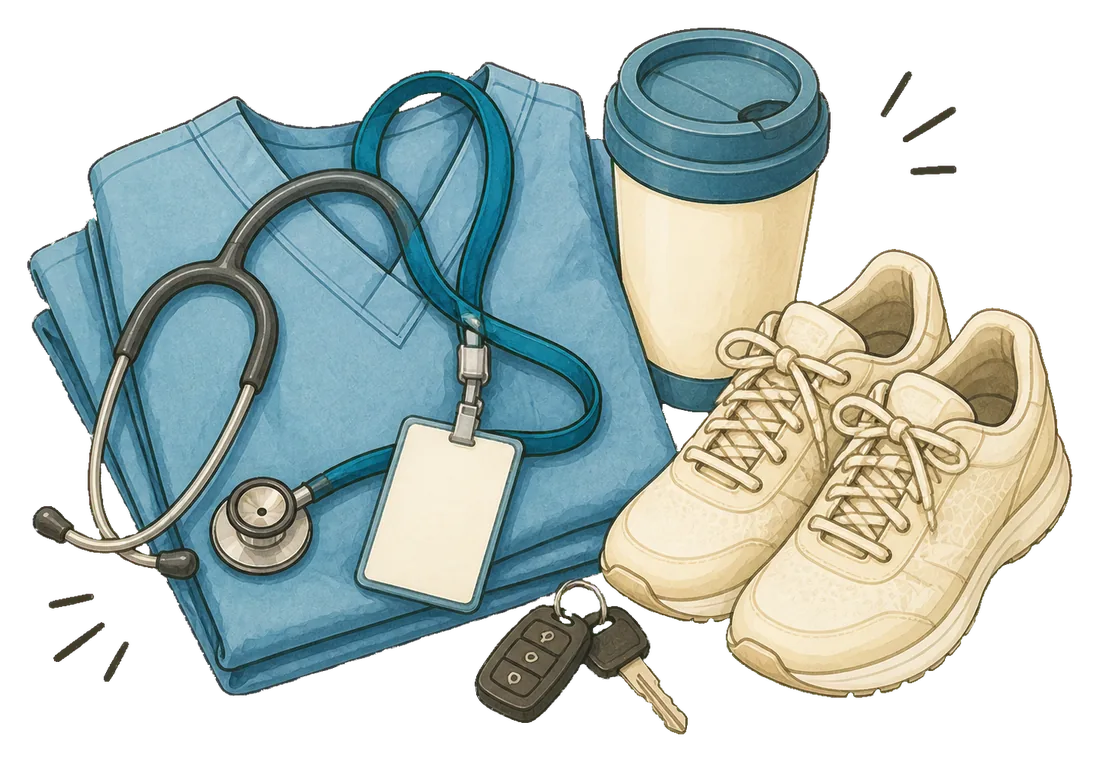
Scrubs, lanyard, stethoscope, keys, coffee that will not get drunk. Out of the door in four minutes and into a drive you would rather have done slowly.
Four wake-ups, one rota
Most wake-up advice assumes a fixed hour and a body clock you can anchor. A rota removes both, then asks you to be sharp at handover anyway. These are the four it keeps asking for.
Handover does not slide. Whoever worked the night cannot leave until you are standing in front of them, and they have already been there twelve hours.
An alarm in full daylight, at the exact hour your body has decided is the middle of the day. Everything that makes an early hard is still true, just upside down.
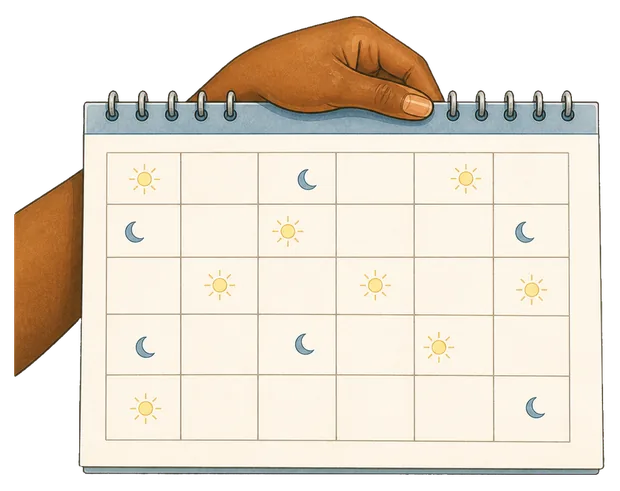
Two lates, a night, a day off that is not really a day off, then an early. No two alarms the same, and nothing to build a habit on.
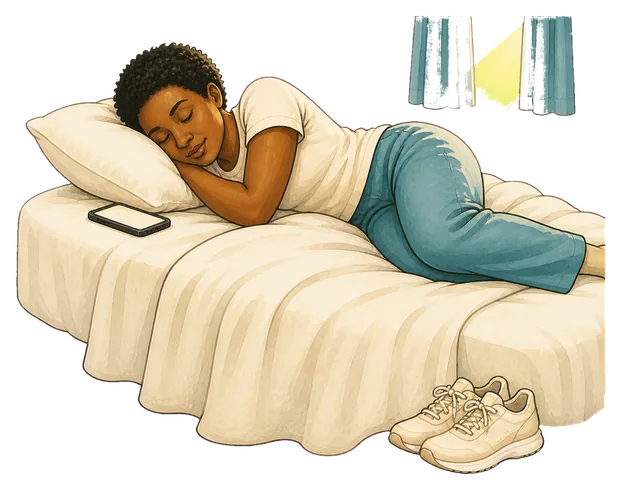
The one where waking up matters most. Grogginess after a nap can last a while, and that window often lands exactly when you are driving in. The nurse sleep-schedule guide covers the published advice.
It is that it is too easy to finish. One swipe and the whole system is over, at the exact moment you are least able to judge whether you should be ending it.
Three steps, and every one of them can be done with your eyes shut and no memory of it afterwards.
Stopping the alarm takes a waking action, in another part of the room. And dismissing it is not the end of the process.
How it works
Three things happen, and the third one is the part other alarms skip.
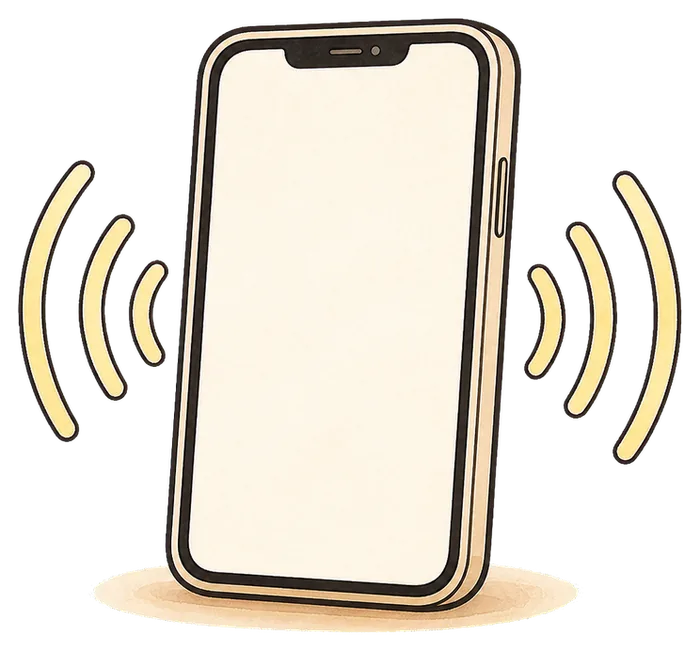
Built on Apple’s system alarm, so it sounds through silent mode, a Focus and a locked screen. That last part matters if your phone lives on silent between shifts.
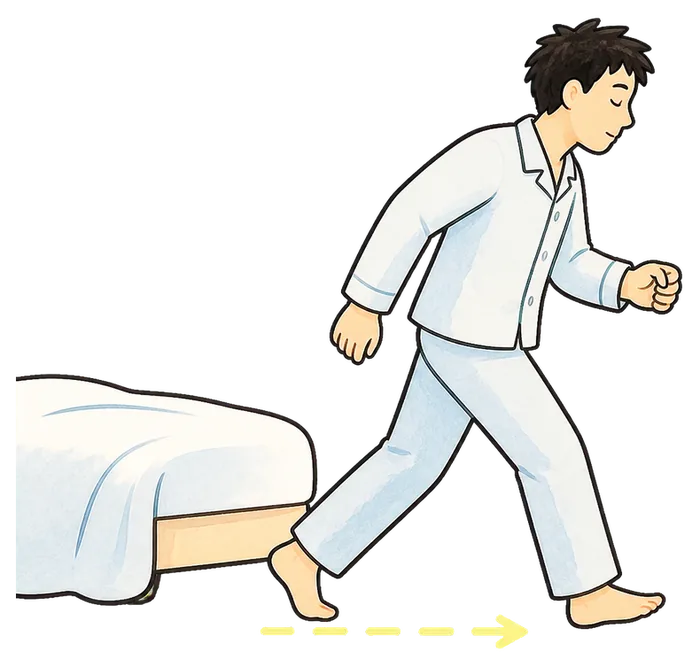
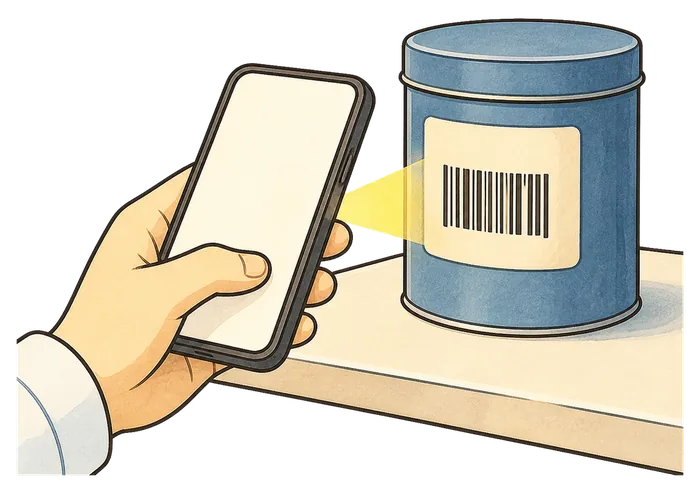
Dismissing the alarm means reaching the code you registered, wherever you chose to leave it. Only that exact code works, so there is no shortcut from under the duvet.
A few minutes after you dismiss it, the stay-awake check asks you to confirm you are still up. No answer, and protection restarts. This is the part built for the swipe you do not remember.
Put the code on the coffee tin, the bathroom mirror, the fridge, or the lanyard hanging by the door. Anywhere your morning already has to go.
Where to put it
Pick something your morning already has to reach, far enough away that getting to it means standing up. Then the alarm stops being a thing you fight and becomes the first step of getting out of the door.
You can register a printed QR code or an ordinary household barcode you already own. Up to two backup items can be added, so three codes in total, in case the first one is unreachable.
The honest way to try it
Everything about waking up sounds manageable when nothing depends on it. Use it on three shifts you actually have to be at, which is what the free trial is for.
Shift one
Set the alarm, register a code, and find out what it feels like to have to stand up to stop the noise.
Shift two
Too easy means it was too close. Too annoying means you picked somewhere your morning does not really go. Adjust it.
Shift three
Now you have something to compare. Did you arrive with time to hand over properly, or did you not?
Three wake-ups are free, with every Pro feature included. No account, no card.
Plans
Start on the free trial. Decide afterwards, on evidence.
No card, no account
Enough to test it on a real shift start before you decide.
Monthly or annual, shown in the App Store
Your first three wake-ups include every Pro feature, free.
Being straight about the limits: Mornio reduces the chance that a half-asleep dismissal costs you a shift. It cannot promise you will never oversleep, it cannot help if the phone is off or flat, and there is a deliberate emergency dismissal, because an alarm you could never turn off would be the wrong thing to build. It is not a medical device and makes no claim about fatigue, sleep quality or safety at work. It also needs iOS 26.1 or later and there is no Android version.
Pricing is shown in the App Store and may vary by region. Subscriptions renew until cancelled and can be managed in your Apple account. See the Terms of Use and Privacy Policy.

4:51AM
Set Mornio tonight. Put the code where your morning already goes. Then find out what the shift feels like when you arrive with time to hand over properly.
Questions
Yes. An alarm can be set for any time of day, so a 4pm wake-up before a night shift works exactly like a 4:45am one. The name is about the app, not about a time on the clock.
Yes. Mornio’s alarm is built on Apple’s AlarmKit, the system alarm framework, so it sounds through silent mode, Focus and a locked screen. That matters if your phone lives on silent out of habit between shifts. It is also why Mornio requires iOS 26.1 or later and is iPhone only.
That is what the stay-awake check is for. A few minutes after you dismiss the alarm, Mornio asks you to confirm you are still up. You pick the delay when you create the alarm, or switch it off. If you do not respond, Mornio restarts protection.
No. There are no streaks to keep and no penalty for a missed morning, so a pattern that moves costs you nothing. Alarms are set individually, which suits a rota that changes every week. Worth saying plainly though: the most common way anyone misses a shift is a wrong or unset alarm after the pattern changed, and no app can catch that for you. Setting it the moment you learn the shift is still the single most useful habit.
Somewhere your morning already goes, far enough from the bed that reaching it means standing up. The bathroom mirror, the coffee tin, the fridge, or the bag and lanyard by the front door all work well. You can register a printed QR code or an ordinary household barcode you already own.
Yes, and the stay-awake check is arguably more useful there than in the morning. Waking from a nap can leave you groggy for a while, and that window often lands exactly when you are driving in, so a check a few minutes later is worth having. Our shift worker guide covers the published advice on this and links its sources.
No. There is no sign-up, no email and no password. Your alarms and registered codes stay on your iPhone.
No. Mornio is iPhone only. The reliable alarm is built on Apple’s AlarmKit, which has no Android equivalent, so there is no Android version and none is planned.